Travelers juggle chargers, batteries and carry-on limits, and a single unlabeled power bank can mean a confiscation, an argument at security, or an unexpected fee at the gate. Knowing the rules and having the right tools in your bag — from capacity labels to the best luggage scale for travel to avoid overweight surprises — matters as much as keeping your phone charged.
This guide walks you through what airline and safety authorities expect, how to verify a power bank’s capacity, when to seek airline approval, and simple packing steps to keep devices compliant and usable on board so you don’t get stuck at security.
Quick Answer
Yes — you can bring power banks on a plane, but only in carry-on baggage. As a rule of thumb: under 100 Wh is allowed without airline approval; 100–160 Wh is allowed in carry-on with airline approval (and is often limited to one or two units); anything over 160 Wh is prohibited from passenger baggage and must be shipped as dangerous goods. Always confirm your airline’s policy before travel.
- Carry power banks in carry‑on only — never checked luggage.
- Stick to units under 100 Wh for the simplest, no‑approval travel; seek airline approval for 100–160 Wh packs.
- Protect terminals (cover or tape) and keep the device accessible for inspection.
- If the pack lists only mAh, convert to Wh or check the manufacturer specs before flying.
- Weigh and pack smart — use the best luggage scale for travel to avoid carry‑on weight issues when taking multiple chargers or larger banks.
Why This Happens
At the core, the rules exist because portable power banks pack a lot of chemical energy into a small, lightweight package. If the cells are damaged, defective, improperly protected or shorted, that stored energy can be released violently as heat and flame — a phenomenon called thermal runaway. Those fires are fast, hot and produce dense, toxic smoke, and they’re much harder to control once they start than a typical cabin fire.
Regulators and airlines also face practical uncertainty. Many power banks are only labeled in milliamp-hours, have incorrect or missing capacity markings, or are counterfeit. That makes it difficult for security staff to assess how much energy the device contains at a glance, so authorities adopt conservative rules to reduce risk across millions of passengers.
- Manufacturing and wear: imperfect cells, poor internal protection circuits, or damage from drops can create internal shorts that trigger failures.
- External short circuits: exposed terminals or loose items in luggage can bridge contacts and ignite a battery quickly.
- High energy density: larger-capacity units can feed a bigger, longer-lasting fire than smaller ones, increasing severity.
- Inaccessibility and suppression limits: a fire inside checked cargo is harder for crew to detect and fight, and some fire-suppression systems are not designed for lithium battery blazes.
- Passenger behavior and variability: people mix different chargers, attempt in-flight charging improperly, or pack multiple spare batteries, which raises the chance of an incident.
Put together, these technical vulnerabilities, labeling inconsistencies and operational realities force regulators to set clear, broadly enforceable limits — and that’s what leads to the screening, declarations and carriage rules travelers see at airports.
Practical Solutions
Free and low‑cost steps before you leave
Small prep removes most headaches at the airport. Do these simple checks the day before you travel.
- Always pack power banks in your carry‑on, not checked baggage, and put them in an easy‑to‑inspect outer pocket or a clear pouch so security can see the label or specs without digging through your bag.
- If the unit lacks a Wh label, print or screenshot the manufacturer specifications on your phone and save them offline. Security and airline agents accept a quick spec lookup more often than a verbal estimate.
- Protect the terminals: cover exposed contacts with tape, use the original terminal caps, or stash the bank in a small zip bag or dedicated power pouch to prevent short circuits.
- Contact your airline in advance if you think your bank may require approval so you have written confirmation. If approval is granted, carry that email or reference number with you.
- Bring only the number of spare batteries you actually need; fewer items reduce the chance of questions or confiscation at security.
Use tools that save time and stress
Simple devices and organizers keep you compliant and speed you through checkpoints.
- Weigh your carry‑on at home with the best luggage scale for travel to ensure your bag meets the airline’s carry‑on weight limit—this avoids last‑minute gate checks where staff may inspect batteries more closely.
- Keep a compact electronics organizer or pouch so power banks and charging cables stay separate from clothes and liquids during screening.
- Use a small label maker or permanent marker to add Wh information (if known) onto the unit so it’s visible to security without having to open packaging or search online.
Product‑based choices that reduce hassle
Choosing the right type of power bank makes compliance and everyday use easier.
- Pick slim, clearly labeled banks with Wh printed on the housing so you can prove capacity at a glance.
- Favor units with built‑in terminal covers or recessed ports to eliminate the need for tape or extra bags.
- Consider USB‑C Power Delivery (PD) models if you need fast charging—fewer cables and ports simplify inspections and in‑flight use.
- If you need higher capacity for long trips, buy airline‑approved 100–160 Wh units and secure approval before travel; keep proof of approval accessible.
- For adventurous trips, pick integrated or ruggedized power banks (no exposed terminals) and solar‑charging units that clearly list internal battery specs.
At the airport and on board
Small behaviors keep you compliant and polite during transit.
- When asked, take your power bank out of your bag and place it in the screening bin separately—this speeds up checks and reduces handling of your luggage.
- If a staff member wants to inspect the unit, stay calm and produce any printed or digital proof of capacity and airline approval if applicable.
- Use your power bank on board only when allowed; follow crew instructions and avoid charging in blocked aisles or shared seats where cords create hazards.
- If a power bank is confiscated, ask for a property tag or incident number so you have a record for follow‑up. For high‑value units, consider travel insurance that covers loss or confiscation.
Recommended Products
Pick power banks that make airline compliance simple: compact under‑100 Wh units for carry‑on convenience, USB‑C PD models for fast charging, and airline‑approved 100–160 Wh options when you need extra capacity. Also look for slim, clearly labeled units (Wh printed on the case), integrated designs with protective casings to avoid exposed terminals, or solar‑charging models if you want off‑grid top‑ups.
PowerCore 10000 PD
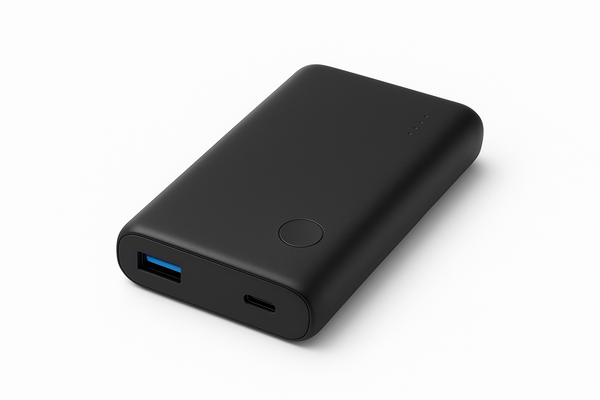
Brand: Anker
Anker’s PowerCore 10000 PD is a compact, travel-friendly 10,000 mAh power bank that stays well under the 100 Wh airline limit. It offers 18W USB-C Power Delivery for fast charging of phones and small tablets, a pocketable lightweight design ideal for carry-on travel, and Anker’s reputation for reliable build quality and safety protections—making it a convenient, trusted choice for travelers who need quick top-ups on the go.
PowerCore 10000 PD
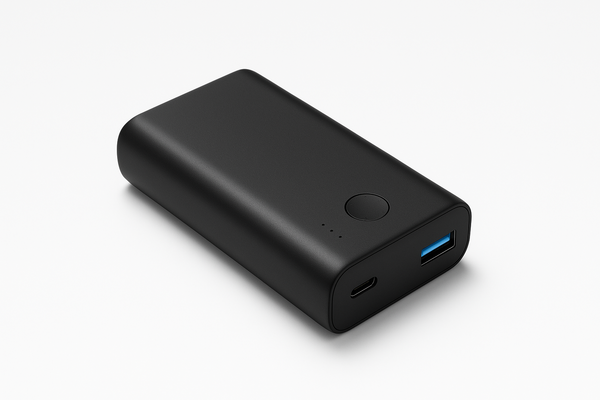
Brand: Anker
Compact, travel-friendly 10,000 mAh power bank with 18W USB-C Power Delivery for fast charging of smartphones and small devices. Trusted brand, lightweight and small enough for carry-on (under 100Wh), making it ideal for travelers who need reliable quick top-ups on the go.
Omnicharge Omni Ultimate (38,400mAh / 140Wh) Portable Power Bank
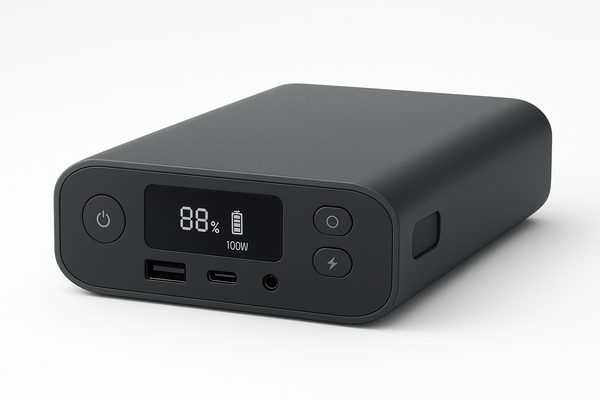
Brand: Omnicharge
At 140Wh this Omnicharge Omni Ultimate falls squarely in the airline-approved 100–160Wh range, offering a balance of high capacity and travel legality (airline approval required). It includes an AC outlet plus USB-C PD and multiple USB ports for charging laptops, cameras, phones and other gear — ideal for long flights or remote work. Omnicharge is a trusted brand for travel power solutions, and the unit’s compact design and robust output options make it especially suited to frequent travelers (carry-on use only; check with your airline before flying).
Anker PowerCore Slim 10000 PD (20W)
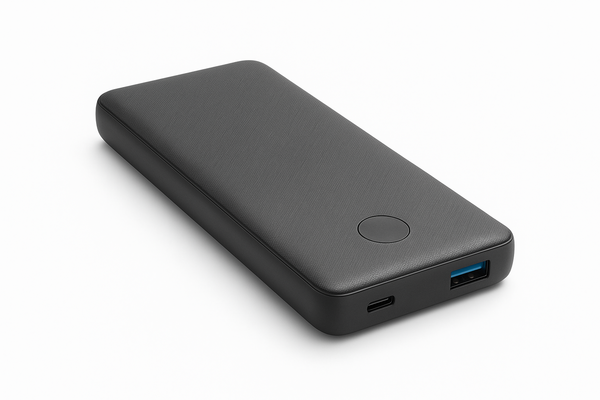
Brand: Anker
Slim, pocket-friendly 10,000mAh power bank from a trusted brand with 20W USB-C Power Delivery for fast phone charging. The unit lists its energy capacity in Wh (approx. 36Wh) for easy airline compliance and clear labeling, making it ideal for travelers who need a compact, airline-friendly backup battery.
Anker PowerCore 20000 PD Portable Charger
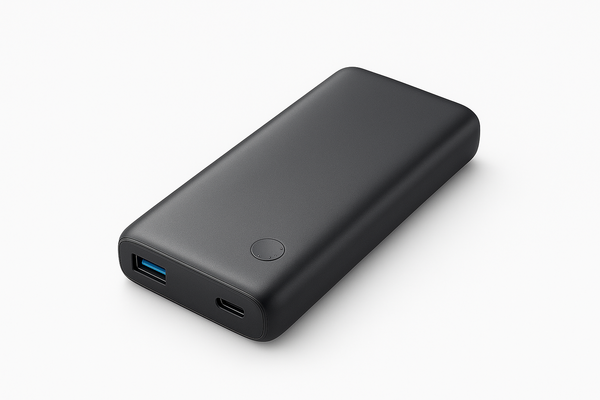
Brand: Anker
Reliable, travel-friendly 20,000mAh capacity (≈72Wh) that stays within most airline carry-on limits, fast USB‑C Power Delivery for quick phone or tablet top-ups, and a sturdy protective housing that keeps terminals recessed and protected. Compact enough for packing, includes multiple output ports and Anker’s MultiProtect safety system—good balance of capacity, durability, and brand trust for travelers.
Anker PowerCore Solar 20000 (20,000 mAh) Portable Charger
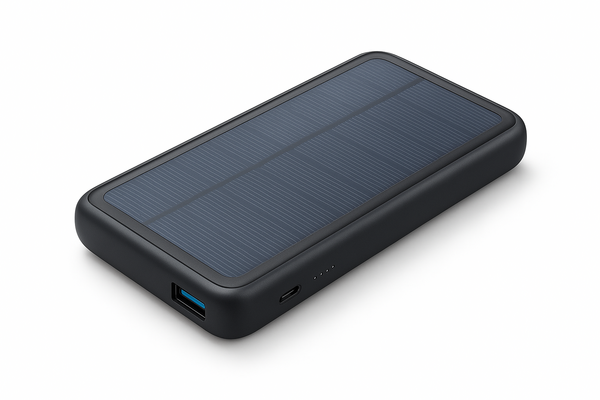
Brand: Anker
Trusted brand with a clearly labeled 20,000 mAh internal battery—great balance of capacity and portability for travelers. Combines a built-in solar panel for emergency top-ups, multiple USB outputs for charging phones/tablets, rugged splash-resistant housing, and PowerIQ for faster charging. Ideal for camping, long transit days, or as backup when outlets are scarce (note: solar is for emergency trickle charging, full recharge works best via AC).
Comparison Table
| Product Type | Best Use | Main Advantage | Downside | Who Should Choose It |
|---|---|---|---|---|
| PowerCore 10000 PD | Short trips and daily top-ups for phones and small devices. | Lightweight and usually under airline Wh limits, easy to carry in hand luggage. | Lower capacity means fewer full charges for tablets or multiple devices. | Minimalist travelers who prioritize airline compliance and low weight. |
| PowerCore 10000 PD | Charging laptops, tablets, and fast-charge capable phones on the go. | Delivers quick, efficient charging via USB‑C PD, often powers larger devices. | Typically heavier and pricier; must check Wh to stay within airline rules. | Business travelers and tech users who need rapid, high‑power charging. |
| Omnicharge Omni Ultimate (38,400mAh / 140Wh) Portable Power Bank | Long-haul trips where high capacity is essential but airline‑approved. | Offers large capacity while complying with 100–160 Wh rules after approval. | Requires airline approval and may be limited to one or two units per passenger. | Frequent flyers who need extended off‑grid power and who plan ahead. |
| Anker PowerCore Slim 10000 PD (20W) | Travel where easy verification by TSA or airline staff is helpful. | Clear Wh labeling speeds security checks and reduces chance of confiscation. | Design choices may trade off style or extra features for clear labeling. | Anyone who wants hassle‑free screening at airports and clear compliance. |
| Anker PowerCore 20000 PD Portable Charger | Adventurous travel where durability and preventing short circuits matter. | Built‑in casing protects terminals and reduces risk of damage or shorts in carry‑on. | Protective designs can add bulk and weight compared with bare units. | Outdoor travelers and those who pack power banks in tight or mixed luggage. |
| Anker PowerCore Solar 20000 (20,000 mAh) Portable Charger | Extended outdoor trips with occasional access to sunlight for recharging. | Can recharge off‑grid; good backup when mains power is unavailable. | Solar recharge is slow and total usable capacity is limited by battery size. | Hikers, campers, and long‑duration travelers who may be away from outlets. |
FAQ
Can I put a power bank in checked baggage?
No. Portable power banks and spare lithium batteries must be carried in carry-on baggage, not checked luggage.
What capacity power bank is allowed on a plane?
Under 100 Wh: allowed in carry-on without approval. 100–160 Wh: allowed in carry-on with airline approval (usually limited). Over 160 Wh: not allowed on passenger aircraft.
How do I convert mAh to Wh?
Use Wh = (mAh / 1000) × voltage (typically 3.7 V for power banks). Example: 20,000 mAh → (20,000/1000) × 3.7 = 74 Wh.
My power bank is labeled only in mAh. Is that a problem?
Not a problem — convert mAh to Wh using 3.7 V. If the conversion pushes you over regulatory limits, contact the airline for guidance.
Do I need airline approval for my power bank?
Only if the capacity is between 100 Wh and 160 Wh. Approval is typically required and airlines may limit the number per passenger.
Can I use the power bank during the flight?
Generally yes, but follow crew instructions. Some airlines may restrict use during certain phases of flight.
What if my power bank has no capacity label?
Try to find model specifications online or contact the manufacturer. If you can’t prove capacity, security or the airline may refuse it.
How many large power banks can I bring?
For 100–160 Wh batteries, many airlines allow up to two per passenger with approval. Check your airline’s policy.
Conclusion
Next step: before you head to the airport, confirm your power bank’s capacity from the unit label or manufacturer specs and pack it in your carry‑on with terminals protected; if the carrier requires approval for larger units, contact them ahead of time. Also weigh your bag at home with the best luggage scale for travel to avoid surprises at check‑in and keep any capacity documentation handy for security checks.